


As part of the 16th Celtic Conference in Classics, we are pleased to announce the availability of exclusive merchandise, specially designed to mark this edition of the event and to celebrate the launch of the new logo of the Celtic Conference in Classics.
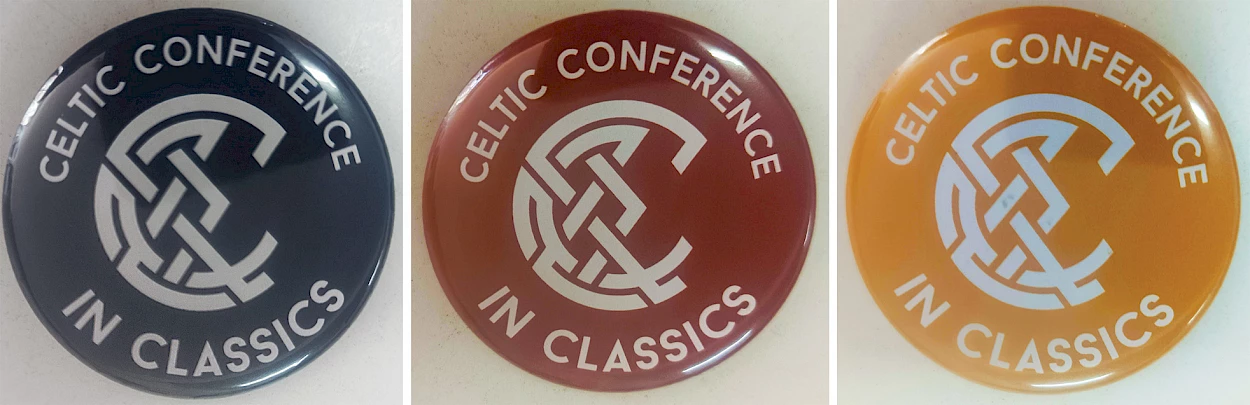
Participants will have the opportunity to purchase T-SHIRTS and PINS.
These items will be available for purchase throughout the duration of the conference at the reception desk, located on the 3rd floor of the Faculty of Arts and Humanities of the University of Coimbra.
We extend an invitation for you to take part in this launch initiative and carry a piece of the CCC spirit with you!
T-shirt: 15€

Pins: 2€
About the CCC logo
The visual identity of the Celtic Conference in Classics draws inspiration from two powerful and deeply symbolic traditions: the Celtic Dara Knot and the Classical Labyrinth.
At its core, the design is anchored in the Dara Knot, a motif rooted in ancient Celtic culture, particularly in Ireland and Scotland. The word Dara derives from the Gaelic Doire, meaning "oak" – a sacred tree in Celtic mythology. The knot itself symbolizes the enduring strength, wisdom, and resilience of the oak’s roots, reflecting themes of personal growth, inner fortitude, and connection to one’s heritage. Its unbroken, looping form echoes the eternal cycle of life, death, and rebirth – a timeless metaphor shared by both Celtic and Classical worldviews.
Intertwined with this is the evocative image of the Classical Labyrinth, famously linked to the myth of the Minotaur. The labyrinth has long symbolized the human journey through complexity, confusion, and existential challenge. In the context of this conference, it may be read as a metaphor for the modern scholar’s path – navigating the intricate terrain of ancient thought in a rapidly shifting technological age. The inclusion of the three interwoven 'C's, standing for Celtic Conference in Classics, pays homage to the unifying force of this scholarly gathering.
The color palette further enriches the symbolism:
-
Gold evokes prestige, knowledge, and intellectual excellence – qualities central to both Classical and Celtic traditions, and to the spirit of academic pursuit as a whole.
-
Clay brown tones ground the logo in antiquity, recalling ancient artifacts and craftsmanship, and celebrating the lasting imprint of past cultures on our present understanding.
-
Blue conveys wisdom and clarity of thought, as well as the vastness of inquiry. In ancient Greece, blue was associated with the sea and sky – realms of exploration and transcendence – aligning with the conference’s commitment to broad, inclusive scholarship.
Altogether, the logo is not only a visual mark, but a symbolic map uniting two rich cultural heritages and reflecting our shared academic journey.