


A Arquitectura do Quotidiano: público e privado no espaço doméstico da burguesia portuense no final do século XIX
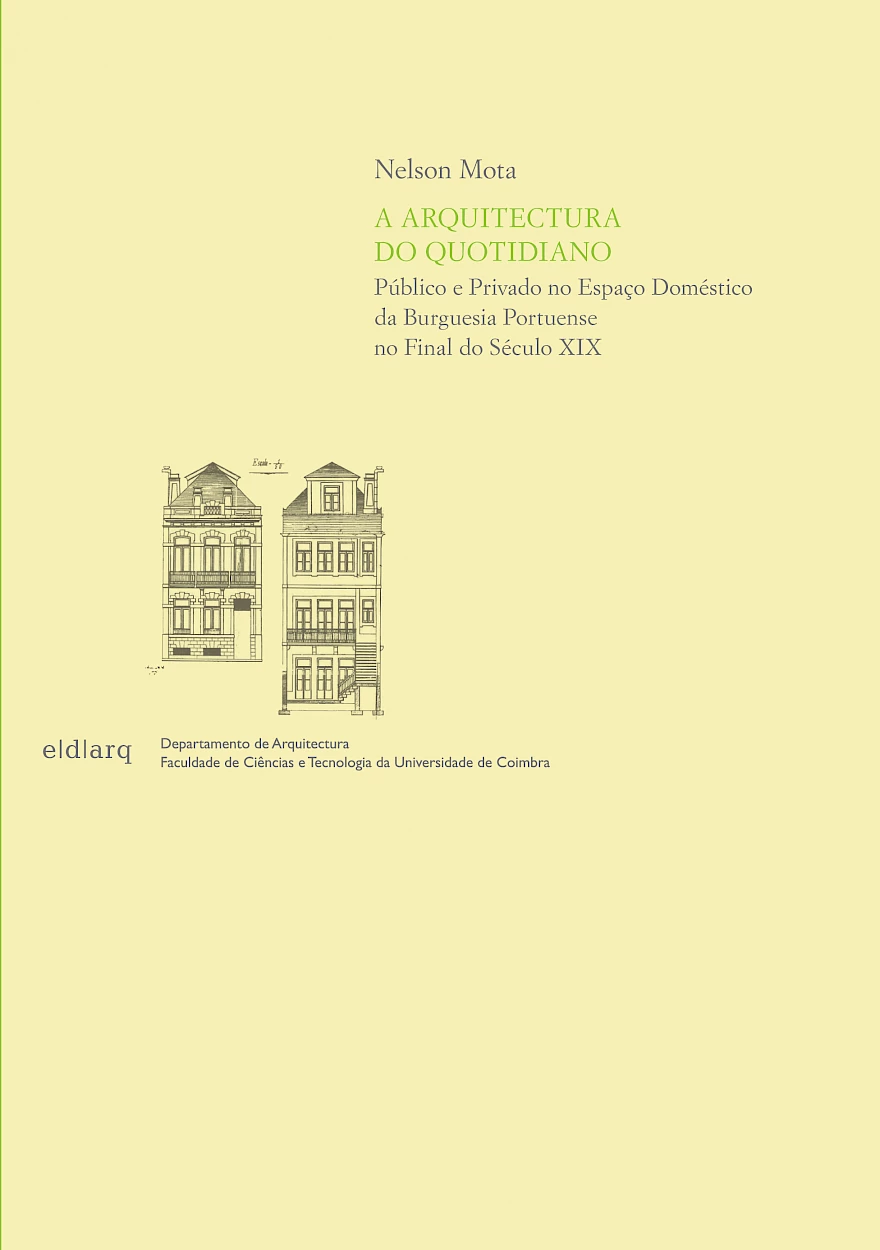
Author: Nelson Mota
Publisher: Coimbra: e|d|arq
Date: 2010
Number of pages: 250
ISBN: 978-972-99821-5-6
Sinopse
Throughout the 19th century, the bourgeoisie asserted itself as the dominant social group. Initially, it began by emulating the habits of the aristocracy, but over the course of the century, it developed a class consciousness, which was revealed, for example, in the emergence of the family as a moral reference. With the idealization of the family came also an increasing focus on defining the boundaries between the place where it is protected and the one – the other – where it is exposed. The definition of the boundary between private and public domains became an obsession.
The domestic space – by definition, the universe of family intimacy – is established as a place where the anxiety of finding limits for these two domains is particularly intense. Thus, the possibility of the domestic space assuming the role of metonymy for the world we live in, consecrated it as the privileged object of this investigation.
With the current architecture of the city of Porto as support, this study aims to contribute to clarifying whether there is, as Walter Benjamin refers to, an illusory universe in which the 19th-century bourgeoisie built its everyday life separated from reality, or whether there was already a perception of the permeability of the domestic space to the entry of the public, as Beatriz Colomina observed in the homes of the early Moderns.