


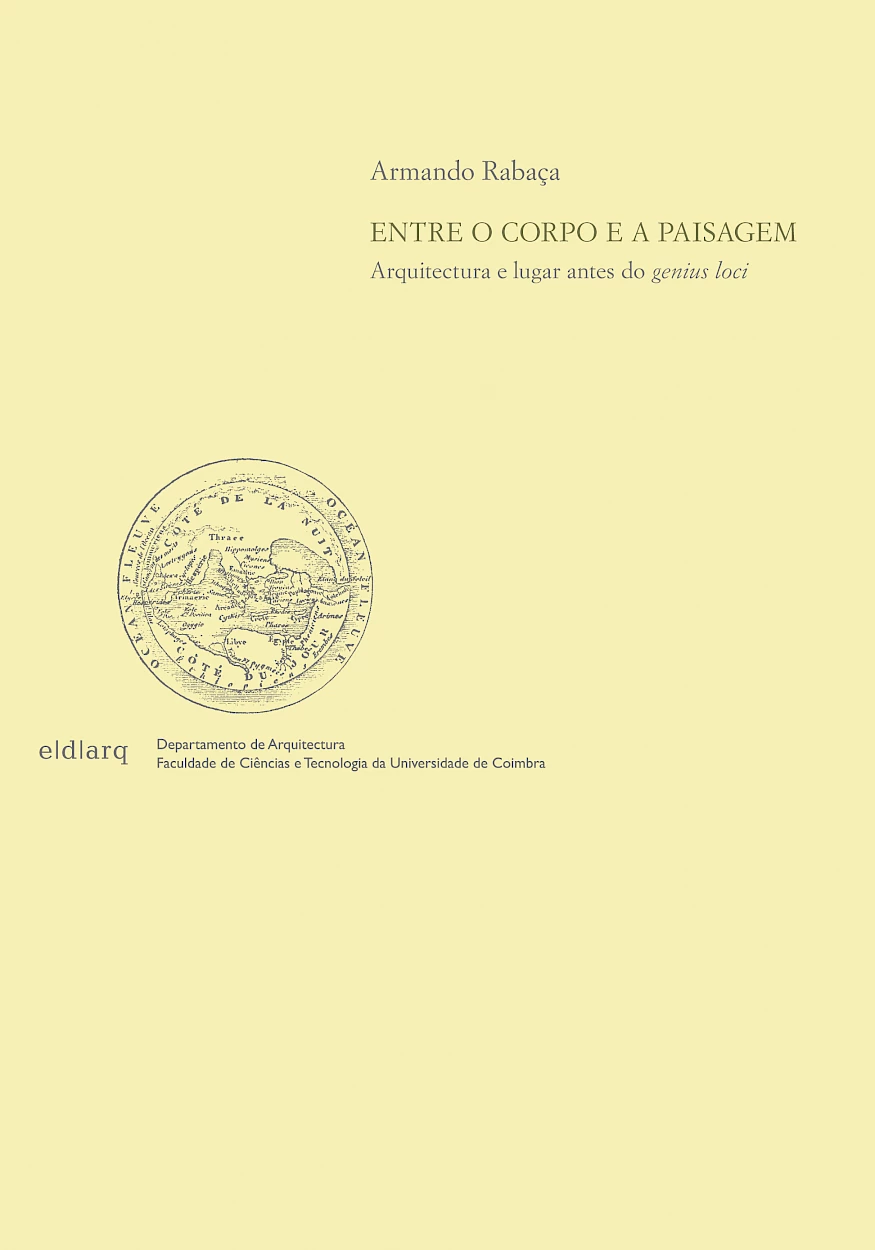
Author: Armando Rabaça
Editor: Coimbra: e|d|arq
Date: 2011
Number of pages: 160
ISBN: 978-972-99821-6-3
Sinopse
The need to systematize the elementary principles of spatial organization, particularly urgent in the early stages of learning the discipline, leads us to revisit the beginning of its history. In this, we seek examples of how space is organized from one, two, or more points, how natural elements provide references to which human action responds and with which it establishes a referential system that can be called place.
If prehistoric man inaugurates the construction of place from a point with Stonehenge, it is understood that the idea of the center implies defining its outer limit, constructed in the image of the earth. This mimesis adopts the model of its immediate surroundings in Crete, establishing itself as a continuation of the natural world it venerates. The Mycenaean reality demands for architecture its own autonomy, paving the way for Greek architecture. This, conceived as an integral part of the landscape, accepts a common natural order, expressing it in two ways: through abstract rules of proportion, but still through compositional and spatial systems that recognize the specificity of each place. Thus, it develops as a complement and in continuity with it.