


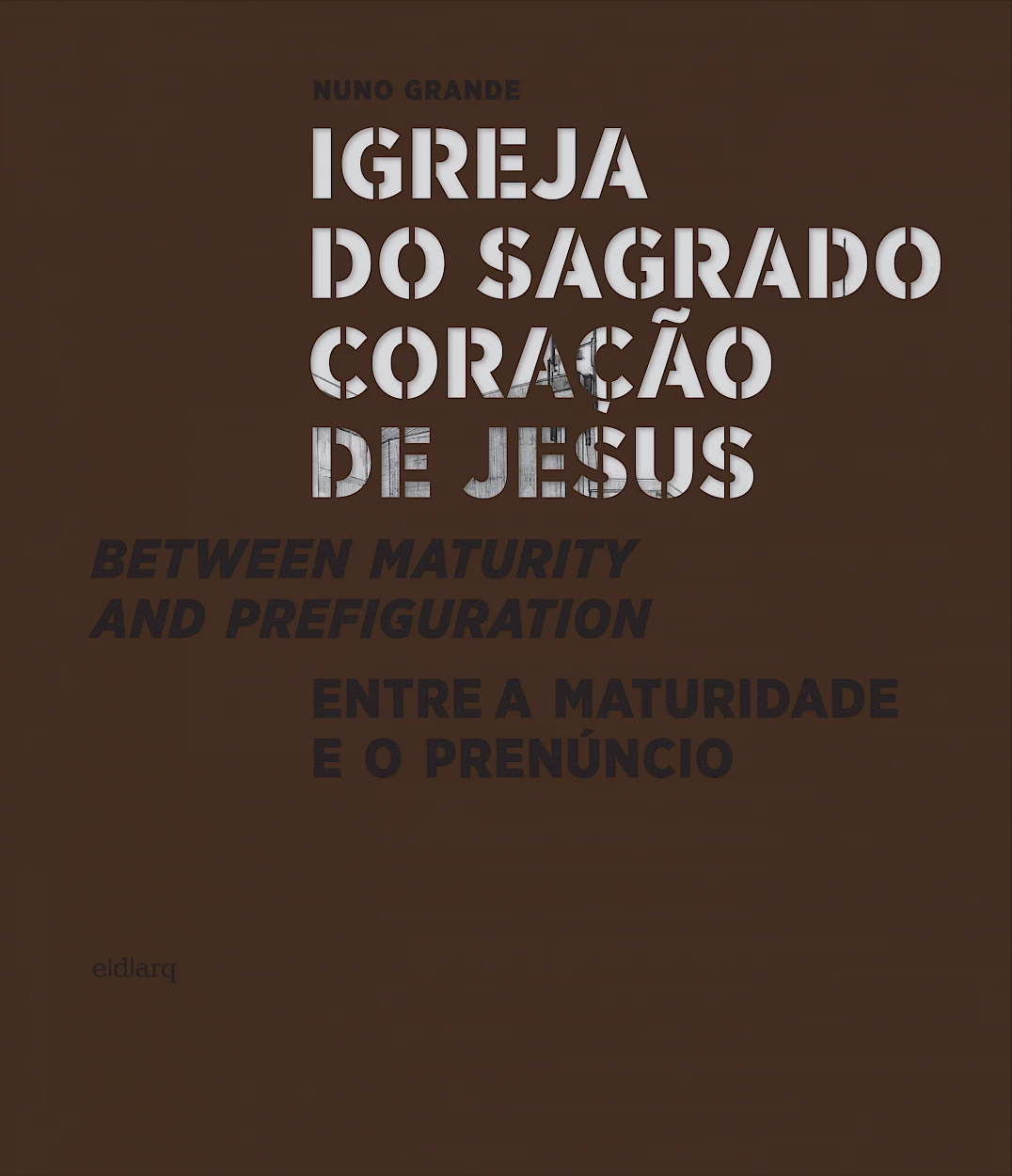
Author: Nuno Grande
Coordination: Armando Rabaça, Bruno Gil, and Luís Miguel Correia
Editor: Coimbra: e|d|arq
Date: 2020
Number of pages: 63
ISBN: 978-989-54686-5-2
Sinopse
The Church of the Sacred Heart of Jesus is one of the most significant architectural works in Portugal from the past half-century (Valmor Prize in 1975, classified as a National Monument since 2010); yet, paradoxically, it remains one of the least known among the Portuguese and least remembered by architects. Ultimately, this may have been one of the intentions of its authors, Nuno Teotónio Pereira (1922–2016) and Nuno Portas (1934–): to create a work so subtly integrated into the urban fabric of Lisbon that it would almost go unnoticed, while still drawing its true meaning from the Polis. This book seeks to understand how this architectural project simultaneously represents the culmination of a maturation process by its authors (1949–1961) and a prelude to the Catholic Church’s (Second Vatican Council) and Portuguese society’s shift toward more urban and universal values—an evolution that the Carnation Revolution would fully affirm (1962–1974). The book includes a historical essay by Nuno Grande, original study sketches by the architects, new technical drawings of the complex, and recent photographs by Márcia Lessa.