


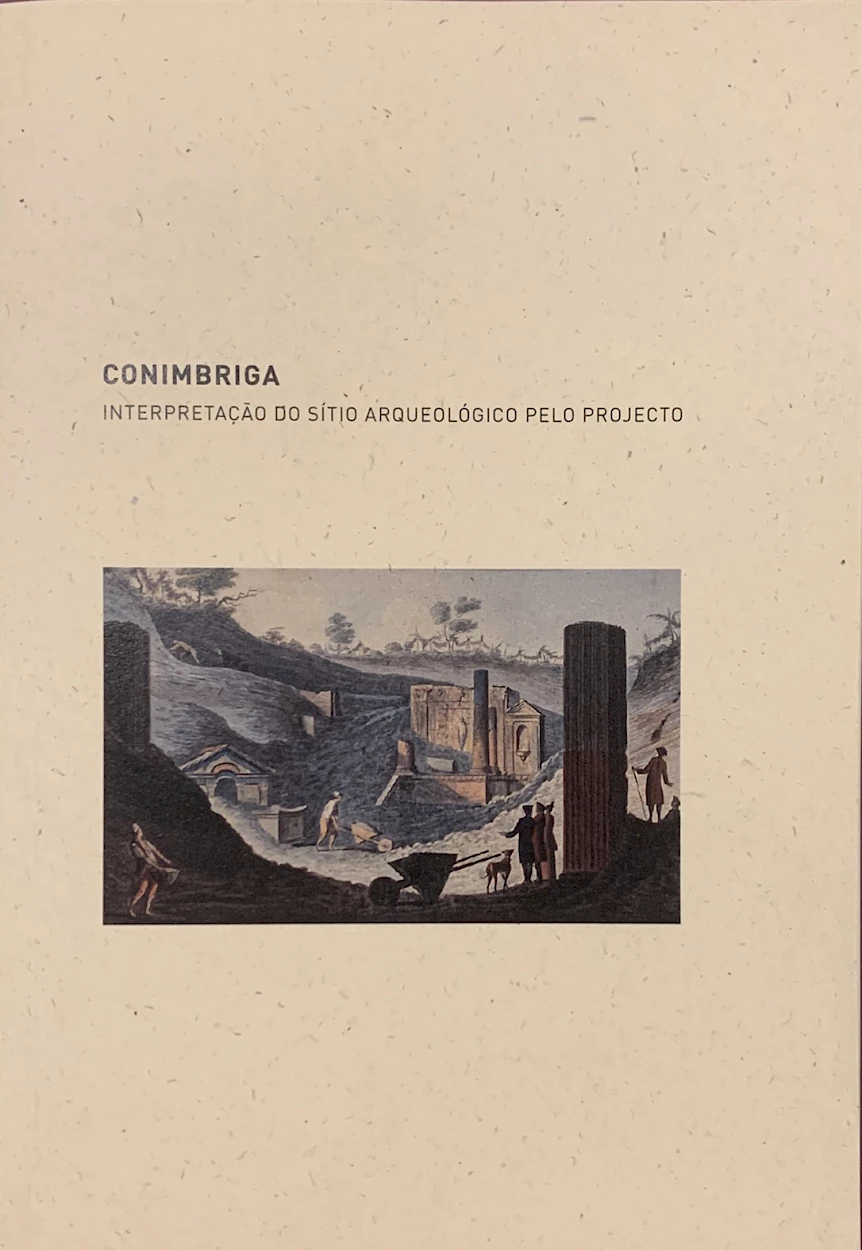
Coordination: Paulo Providência
Editor: Coimbra: e|d|arq
Date: 2016
Number of pages: 185
ISBN: 978-989-99432-1-6
Sinopse
This publication presents a collective design process developed within the course Project V – Architecture and Memory, based on the exercise carried out during the 2014/2015 academic year under the theme Conímbriga, Architecture and Memory – Interpretation and Valorization of the Archaeological Site through Architectural Design. This design process includes support materials for the exercise, such as theoretical texts and historical information on the theme, field trips, a topographic interpretation model of the site, and case studies that contextualize architectural design issues, culminating in the student projects that are the focus of the study. From a pedagogical perspective, the exercise is conceived as a means of acquiring critical awareness regarding the processes of architectural interpretation of archaeological sites. Archaeological reconstruction is, by its very nature, an interpretative exercise—based on a set of signs perceived as meaningful. In this sense, every architectural endeavor also involves interpretation—of necessity, of context, of the meaning of transformation. Unlike other architectural exercises, however, the archaeological interpretation exercise necessarily starts from prior knowledge of the data in question. This means that such reconstructions require the study of a set of works taken as cultural models for the fragments being interpreted and reconstituted.