


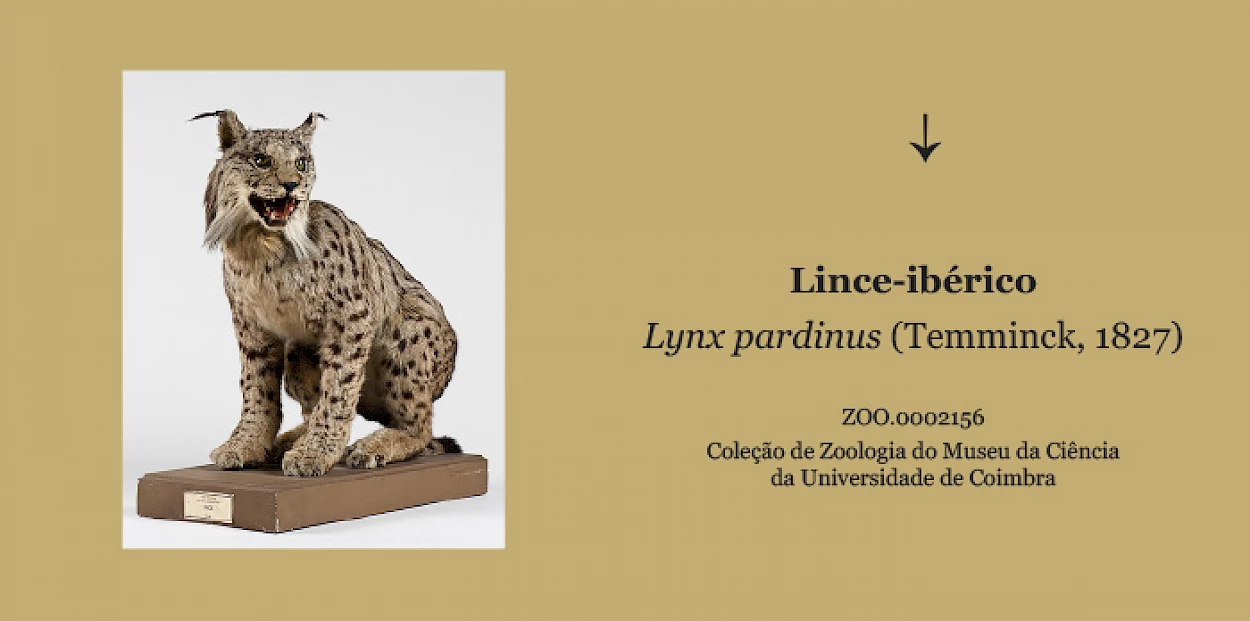
The Iberian lynx is a medium-sized feline species that can only be found s in the Iberian Peninsula. From the 20th century onwards, habitat loss and fragmentation, combined with the decline of its main prey, the wild rabbit, led to a sharp decrease in population. Its conservation status in Portugal is classified as Critically Endangered (CR), due to a population decline of over 80% and the reduction in both the area and quality of its habitat.
To prevent extinction, Portugal established an Ex Situ Conservation Programme for the Iberian Lynx (CNRLI) in 2009 (http://areasprotegidas.icnf.pt/lince/ ), aimed at captive breeding and potential reintroduction into the wild. Since then, 136 cubs have been born, and 79 have been reintroduced into natural habitats across the Iberian Peninsula.
The UC Science Museum holds six Iberian lynx specimens from the late 19th century, originating from Évora, Montemor-o-Novo, Penamacor, and Serra da Estrela. This particular specimen has no recorded date or provenance, but it predates 1928, the year the catalogue referencing it was published.