


NEXT.parts - Next-generation of advanced hybrid parts
Problem Description
NEXT.Parts, Next-Generation of Advanced Hybrid Parts, is an interdisciplinary project developed in collaboration with companies 3D Tech, which is the project leader, Tecnifreza, the research and technology organization INEGI – Institute of Science and Innovation in Mechanical and Industrial Engineering – and the academic institution IPL, Leiria Polytechnic Institute. The project has been funded by EU’s Horizon 2020 science programme (Portugal 2020, COMPETE 2020) in September 2016.
The project develops activities in the field of metal-polymer fabrication solutions by allowing the construction of bi-material hybrid parts through the use of an additive process that adds polymer to another, pre-existing object using photopolymerization, a process by which light causes chains of molecules to link together, forming polymers.
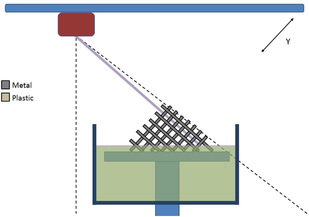 |
To accomplish that, the NEXT.parts equipment will feature an evolution of the stereolithography process that applies laser in multiple directions, allowing it to overcome shadow zones. The support software will advise the user about the best construction strategies and generate the construction program. Applications of bi-material hybrid prototype parts, multi-functional parts with sensitive and/or electronic elements and reconstruction of controlled drug delivery implants in healthcare are addressed.
Modelling & Computational Challenges
The main objectives of the mathematical component of NEXT.parts are:
- construction of a computing platform to optimize the production of specialized metal parts with polymeric coating;
- modelling and simulation of controlled and targeted drug release from responsive biodegradable implants coating metal devices.
Research at LCM
The research addresses two different but complimentary paths. The mathematical modelling will support the construction of hybrid metal-polymer devices. Formulation of the problem as a nonlinear optimization problem. Development of algorithms suitable for solving the problem formulated. The complexity of the problem and the large number of resulting data representation used, suggest the combination of optimization algorithms with alternative heuristic methods capable of providing a good approximation of the optimum solution within acceptable runtimes from a practical point of view. Particular attention is devoted to orthopedic implants. The drug transport models include diffusion, convection effects, related to the porosity of the structure, biodegradation, viscoelasticity and the influence of external factors such as temperature or pH.
Publications
- J. A. Ferreira, Paula de Oliveira and E. Silveira, Drug release enhanced by temperature: an accurate discrete model for solutions in H3, preprint
- Raquel Bernardes, J.A. Ferreira, M. Grassi, Paula de Oliveira and M. Nhangumbe, Drug delivery from bimaterial orthopedic implants: a mathematical approach, preprint
Project Team
- Paula de Oliveira
- José Augusto Ferreira
- Marta Pascoal


